Wonderful Fall Banquet!
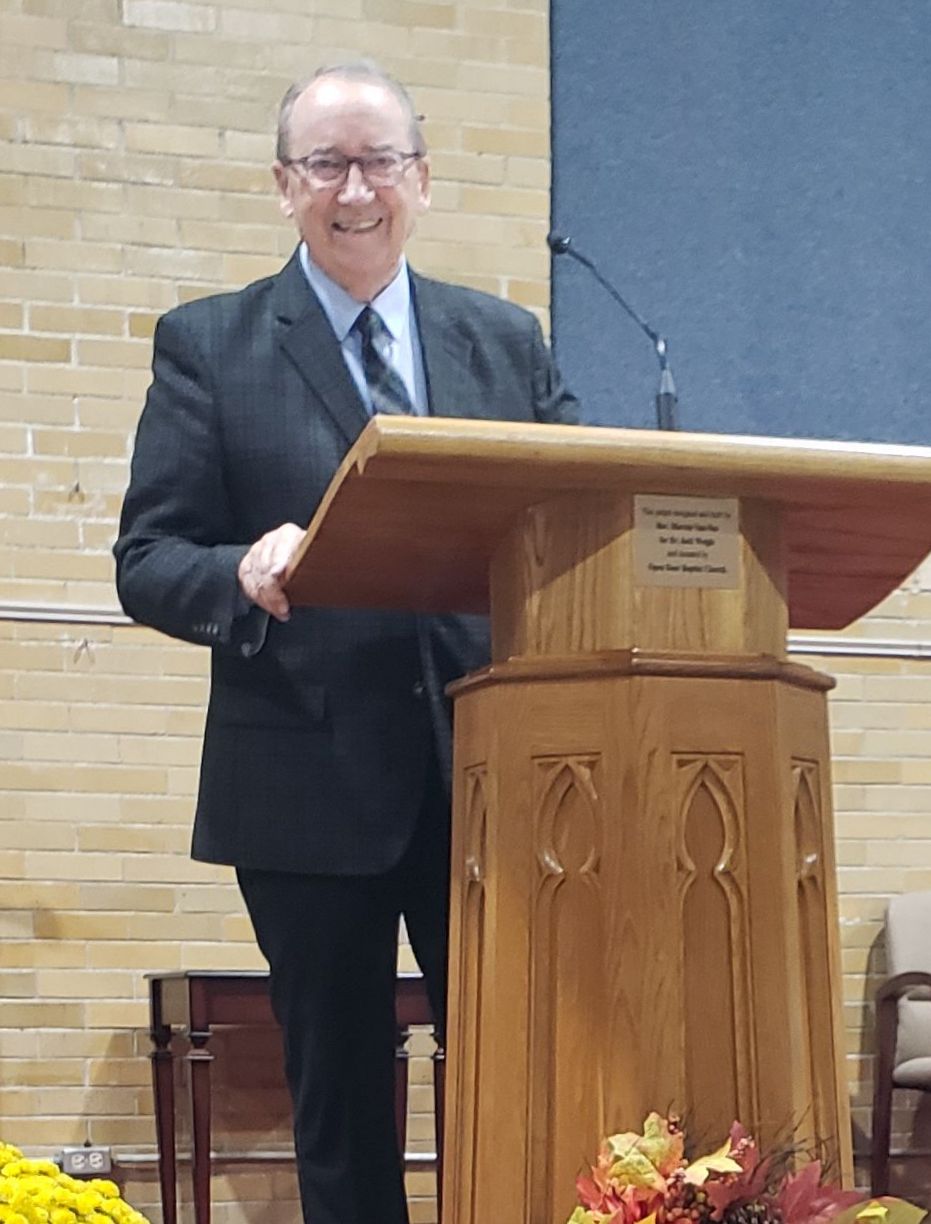
Dr. David Martin from Cincinnati, brought the message at this year’s Fall Fundraising Banquet. With his text from Nehemiah chapter 6, Dr. Martin spoke to us about “When to Quit.”
The gymnasium was comfortably filled for this year’s banquet, and included in attendance a number of preachers from various churches. The delicious food, beautiful music, and great fellowship made for a very special evening. When the offering was taken, $9,856 of the $10,000 winter expense goal was counted...and the total was soon pushed to an even $10,000.
We are so thankful for all those that took part in the Fall Banquet, and especially for our many friends that mailed in their offerings. About $3,000 was received in early gifts and pledges.
Please mark your calendar for the next Heritage banquet. The annual Graduation Banquet is scheduled for Tuesday evening, May 5, 2026.
His First Review – An Attack
The first known mention of him in London was one of condemnation. The experienced and educated playwright, Robert Greene, viciously attacked the young pretender as an upstart. In print, he was called a “crow” and derided for his lack of education.
True, young William Shakespeare never attended any university, yet he would eventually rise to the pinnacle as England’s greatest writer and dramatist. Nothing is recorded as to how Shakespeare reacted to this criticism. Significant, is that though the rejection may have discouraged William Shakespeare, he did not quit. (Schoenbaum, Samuel. William Shakespeare - A Compact Documentary Life. 1973. England: Oxford University Press, 1987 p. 151-158)
Those Seeking Power Will Say Anything
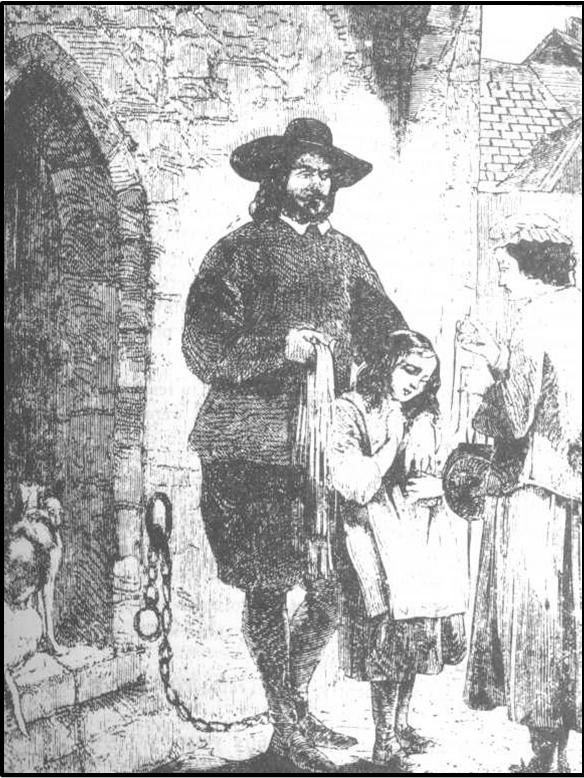
In 1660, Charles II was brought back to England at the “Restoration.” From a nation, that only 11 years before had thrown off the monarchy and the persecuting state church, Englishmen now felt secure in his promised political change.
Samuel Pepys records that on the day the new king landed in Dover, England, that the mayor presented Charles II with a very rich Bible. The king received it and said “it was the thing that he loved above all things in the world.”
He had promised religious freedom in his “Declaration of Breda,” yet after Charles II had secured the throne, he began the systematic persecution of true Christians. Next to the short and violent reign of Queen Bloody Mary (a century before she had also made promises), no other English monarch persecuted Christians to such an extent. Over 70,000 endured religious persecution, and some 8,000 died in the prisons. The most famous of those sufferers was John Bunyan, spending twelve years in the Bedford jail...all under a governmental leader that “loved the Bible above all things in the world.”
The Strongest Attacks
One hundred and sixty-two years ago, three Union ships sailed up the Ogeechee River. Their mission was to destroy the Confederate stronghold at Fort McAllister. The fort was the last major defense for the city of Savannah, Georgia, the southern coastal railroad, and the Confederate blockade runners.
On that early November 19th morning, one of the boats towed the U.S.S. Para,a mortar schooner. At 8:15 a.m., the battle began with both sides firing their cannons. After six hours, the Union ships went back down river to join their squadron, receiving the worse for the engagement.
This was not the first time, nor the last time that the Union Navy would try to silence Fort McAllister. During an eight month period, the Union admiral would launch eight separate attacks, each becoming larger and more calculated.
The first attack of a fort by an ironclad happened on January 27, 1863 when the ironclad U.S.S. Montauk entered the fray. She was hit fifteen times by the guns at the fort, and only quit firing when she ran out of ammuniton.
Fort McAllister continued to withstand each attack, and remained in Confederate hands until General Sherman ended his famous “march to the sea” near the close of the war.
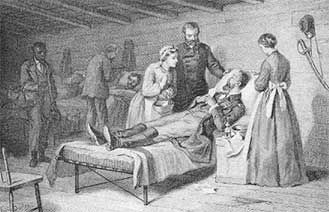
D.L. Moody was a young evangelist during the Civil War. Abraham Lincoln had once visited Moody’s Chicago Sunday School, and the 25 year-old was eager to assist in the war needs.
Moody ended up helping in the Union camp with evangelistic meetings and in the hospitals. He made nine trips to the battle-fronts and he visited many battlefields during the Civil War. He experienced first hand, the death, sorrow, and destruction of the War between the States. He also saw the courage and determination of individuals.
Years later, D.L. Moody would write these words next to I Corinthians 10:13 in his Bible. Mr. Moody wrote: To be tempted is not to sin. The strongest attacks are made on the strongest forts.
Our great enemy will continue to attack us. We need to remember, the stronger the attack, the closer we need to seek refuge in Jesus.
Helpful Chapel Quotes
Justification is greater than forgiveness.
We are born with a sinful nature...we are born walking away from God.
God knows our number, and He knows how to dial it.
If you can lose your salvation, you will have to get another Saviour.
Following the path of least resistance has made many rivers and men crooked.
We need to get back to loving folks like it is a commandment.